Mapping River Decision Making Processes onto Selecting Between Fixed Rate and Adjustable Rate Mortgages During Periods of Economic Uncertainty for First Time Homebuyers
Willa Braun · Aug 16, 2026
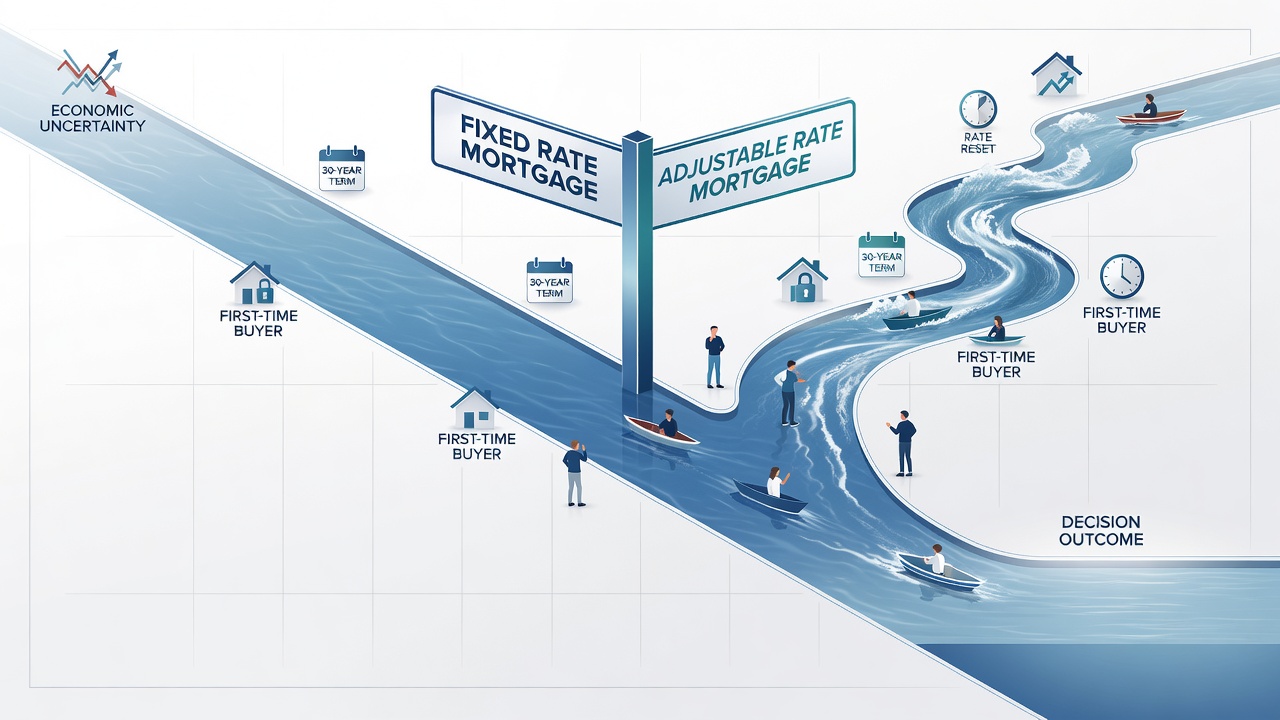
Mapping River Decision Making Processes onto Selecting Between Fixed Rate and Adjustable Rate Mortgages During Periods of Economic Uncertainty for First Time Homebuyers
Experts in behavioral finance have long drawn connections between high-stakes poker choices and personal financial decisions, and one area that stands out involves river decisions mapped directly onto mortgage selections for first-time buyers facing volatile markets. The river in poker represents the final community card where players reassess ranges, pot odds, and implied odds before committing chips, much as homebuyers in August 2026 evaluate fixed-rate stability against adjustable-rate flexibility when inflation readings and central bank signals remain mixed. Researchers at institutions tracking consumer borrowing patterns note that both scenarios require weighing known outcomes against probabilistic shifts, with incomplete information driving the process forward.
Understanding River Decisions in Poker Contexts
Players reach the river after four betting rounds and must decide whether to bet, call, or fold based on updated hand strength estimates and opponent tendencies. Data from major tournament series in 2026 shows that successful river calls often hinge on precise equity calculations rather than intuition alone, and those same quantitative frameworks appear in mortgage analyses when buyers project rate paths over 30-year terms. Observers point out that folding a marginal hand on the river preserves capital for future opportunities, a principle that parallels rejecting an adjustable-rate mortgage when economic forecasts signal sharp upward moves in benchmark rates.
Fixed-Rate Versus Adjustable-Rate Mortgage Structures
Fixed-rate mortgages lock in interest costs for the entire loan duration, providing predictable monthly payments regardless of broader market swings, whereas adjustable-rate mortgages begin with lower introductory rates that reset periodically according to indices such as the Secured Overnight Financing Rate. Federal Reserve economic projections released in mid-2026 indicated that rate volatility could persist through the third quarter, prompting first-time buyers to compare the certainty of fixed payments against potential savings from adjustable products during periods of declining benchmarks. Industry reports compiled by mortgage analytics firms reveal that adjustable-rate originations increased in regions where short-term rates showed temporary dips, yet default studies from teh same period highlight elevated risk when resets occur amid renewed inflation pressures.
Direct Mapping of Decision Frameworks
The river evaluation process begins with range construction, and a parallel emerges when buyers construct scenarios for future rate movements using historical volatility data and forward guidance from monetary authorities. Pot odds in poker translate to the break-even analysis between fixed and adjustable payments, where borrowers calculate the rate increase threshold that would make the adjustable option more expensive over five or seven years. Implied odds correspond to longer-term expectations about housing equity growth and income stability, factors that first-time buyers must quantify before committing to either structure. Case examples from lending data in Canada during summer 2026 demonstrate how buyers who modeled multiple rate paths selected fixed products when uncertainty metrics exceeded historical averages, preserving cash flow predictability in the same way disciplined players avoid marginal river bluffs.
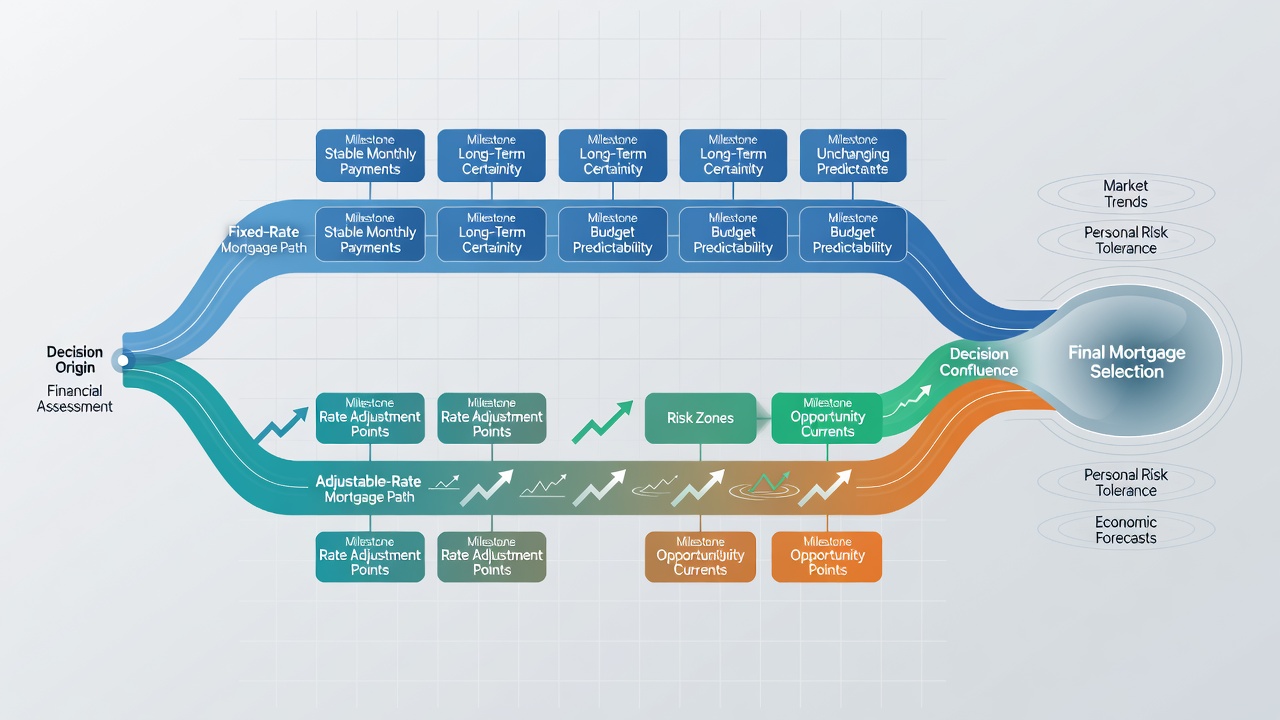
Economic Uncertainty Factors in August 2026
Central bank communications through the summer highlighted persistent core inflation readings above target levels in several major economies, creating conditions where first-time buyers faced wider spreads between fixed and adjustable offerings. European Central Bank minutes from July 2026 noted that policy rates might remain elevated longer than previously anticipated, a development that increased the appeal of fixed-rate contracts for those planning long-term residency. Meanwhile, Bank of Canada data releases showed regional variations in housing affordability, with buyers in certain provinces favoring adjustable products when local employment figures remained strong. These indicators function like river tells in poker, supplying additional information that refines earlier assumptions without eliminating residual uncertainty.
Practical Application for First-Time Buyers
Lenders typically require stress tests that simulate rate increases on adjustable products, mirroring the equity realization checks players perform before calling large river bets. First-time buyers who assemble detailed cash-flow models incorporating worst-case reset scenarios often align their choices with conservative poker strategies that prioritize survival over marginal gains. Government housing agencies in Australia published updated affordability calculators in August 2026 that incorporated forward rate curves, giving borrowers tools comparable to poker software that calculates precise river equities. Those who incorporated multiple economic scenarios into their reviews reported higher satisfaction with their eventual selections according to post-origination surveys conducted by independent research groups.
Conclusion
The structural similarities between river decision trees and mortgage selection processes provide a useful lens for first-time homebuyers navigating August 2026 conditions, where fixed-rate certainty trades against adjustable-rate optionality amid shifting policy signals. Quantitative mapping of ranges, odds, and implied outcomes allows systematic comparison without reliance on emotional responses. Available data from regulatory bodies and lending institutions continues to underscore that informed scenario planning improves alignment between product features and individual risk tolerances across both domains.